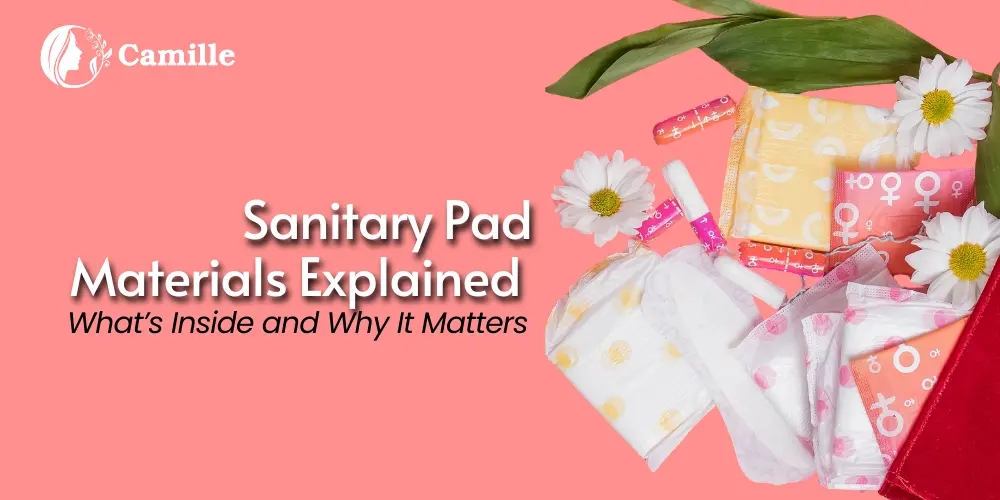
Menstrual hygiene products are essential for millions of women worldwide. Yet, many users rarely consider what goes into the products they use every month. Understanding sanitary pad materials explained in detail can empower consumers to make safer, healthier, and more sustainable choices.
This comprehensive guide explores the materials used in sanitary pads, answers the question “what are sanitary pads made of?”, compares cotton vs synthetic sanitary pads, and highlights the importance of chemical free sanitary pads, organic cotton sanitary pads, and other safe materials for sanitary pads.
Different types of Sanitary Pads
Sanitary pads are designed to suit different flow levels, body sensitivities, and daily activities, so choosing the right type can make periods more comfortable and stress-free.
Regular pads are the go-to option for moderate flow days; they balance absorbency and comfort for school, work, or light activity.
Maxi or heavy-flow pads are thicker and longer, built with extra absorbent layers and leak guards—great for the first few days of menstruation or overnight protection.
Ultra-thin pads use advanced absorbent cores to stay slim and discreet while still locking in moisture, making them popular for active lifestyles and fitted clothing.
Pads with wings include side flaps that fold around the underwear to hold the pad in place and reduce side leaks, especially useful during movement.
Panty liners are the lightest option, ideal for spotting, daily freshness, or the beginning and end of a cycle.
For those with sensitive skin or eco-friendly preferences, organic or biodegradable pads are made from natural, breathable materials and often avoid synthetic fragrances or chlorine bleaching.
Some modern variants also feature gel cores, odor control, and breathable back sheets to enhance dryness and comfort. Selecting the right pad depends on flow intensity, skin sensitivity, and whether you need day, night, or on-the-go protection.

What Are Sanitary Pads Made Of?
When asking “what are sanitary pads made of?”, it’s important to understand that modern sanitary pads are multi-layered products designed for absorption, comfort, and leak protection.
Basic Structure of a Sanitary Pad
Top Sheet
↓
Acquisition & Distribution Layer
↓
Absorbent Core
↓
Back Sheet
↓
Adhesive Layer + Release Paper
Each layer uses specific materials to perform a particular function.
Materials Used in Sanitary Pads
Common Sanitary Pad Materials and Their Functions
|
Layer |
Material Used |
Purpose |
Potential Concerns |
|
Top Sheet |
Polypropylene / Cotton |
Direct contact with skin |
Synthetic irritation |
|
Absorbent Core |
Wood pulp (cellulose), SAP |
Absorbs menstrual fluid |
Chemical processing residues |
|
Acquisition Layer |
Polyester fibers |
Distributes fluid evenly |
Synthetic fibers |
|
Back Sheet |
Polyethylene |
Leak prevention |
Non-breathable plastic |
|
Adhesive |
Synthetic glue |
Keeps pad in place |
Skin sensitivity |
|
Fragrance (optional) |
Artificial chemicals |
Odor control |
Allergic reactions |
Detailed Breakdown of Each Layer
1️)Top Sheet (Surface Layer)
The top sheet is the layer that directly touches the skin. It is usually made from:
- Polypropylene (plastic-based material)
- Cotton (natural fiber)
Synthetic topsheets often feel dry but may trap heat and moisture. Cotton topsheets offer breathability and comfort, especially for sensitive skin.
2️)Absorbent Core
The absorbent core is the most important part of a sanitary pad.
It commonly includes:
- Fluff pulp (wood cellulose)
- Super Absorbent Polymer (SAP)
SAP can absorb many times its weight in fluid, ensuring long-lasting dryness. However, the wood pulp may undergo bleaching processes.
3️)Back Sheet
Usually made from polyethylene plastic, the back sheet:
- Prevents leakage
- Keeps clothes protected
Some brands now use breathable plant-based alternatives to improve airflow.
4️)Adhesive Layer
The adhesive strip keeps the pad in place. It is typically synthetic glue and is covered with release paper before use.
Cotton vs Synthetic Sanitary Pads
Comparison Table
|
Feature |
Cotton Pads |
Synthetic Pads |
|
Breathability |
High |
Moderate to Low |
|
Skin Sensitivity |
Suitable for sensitive skin |
May cause irritation |
|
Absorption |
Moderate |
Very High (due to SAP) |
|
Environmental Impact |
Biodegradable (if pure cotton) |
Non-biodegradable |
|
Cost |
Slightly higher |
Affordable |
COTTON PADS
✔ Natural fiber
✔ Breathable
✔ Biodegradable
✔ Gentle on skin
SYNTHETIC PADS
✔ Higher absorption
✔ Thin design
✔ Longer wear time
✔ Plastic-based layers
For women with sensitive skin or allergies, cotton-based pads are often preferable.
Chemical Free Sanitary Pads: Why They Matter
Many conventional pads may contain:
- Artificial fragrances
- Dioxins (trace amounts from bleaching)
- Chlorine residues
- Synthetic gels
Chemical free sanitary pads avoid chlorine bleaching, synthetic fragrances, and harmful dyes.
Benefits of Chemical-Free Options
- Reduced risk of irritation
- Lower allergy triggers
- Improved intimate hygiene
- Safer for long-term use
Consumers should look for labels such as:
- Chlorine-free
- Fragrance-free
- Hypoallergenic
Organic Cotton Sanitary Pads
Organic cotton sanitary pads are made from cotton grown without pesticides, synthetic fertilizers, or GMOs.
Why Organic Cotton?
- No harmful agricultural chemicals
- Softer texture
- Better for sensitive skin
- Eco-friendly production
Regular Cotton vs Organic Cotton
|
Criteria |
Regular Cotton |
Organic Cotton |
|
Pesticide Use |
Yes |
No |
|
Skin Safety |
Good |
Excellent |
|
Environmental Impact |
Moderate |
Low |
|
Cost |
Lower |
Higher |
Organic cotton pads are ideal for women prioritizing sustainability and health.

Safe Materials for Sanitary Pads
When evaluating safe materials for sanitary pads, look for:
✔ Unbleached cotton
✔ Organic cotton
✔ Bamboo fiber
✔ Plant-based back sheets
✔ Biodegradable absorbent cores
✔ Water-based adhesives
Materials to Be Cautious About
- Artificial fragrance
- Synthetic dyes
- Non-breathable plastics
- Unknown chemical treatments
Environmental Impact of Sanitary Pad Materials
Traditional pads may contain up to 90% plastic. This contributes to:
- Landfill waste
- Ocean pollution
- Slow decomposition (500–800 years)
Eco-Friendly Alternatives
- Biodegradable pads
- Reusable cloth pads
- Compostable organic pads
- Bamboo fiber pads
Infographic: Environmental Comparison
Traditional Pad → 90% Plastic → 500+ Years to Decompose
Organic Cotton Pad → Minimal Plastic → Faster Decomposition
Reusable Cloth Pad → Zero Disposable Waste
Sustainability is becoming a key factor in consumer decisions.
How to Choose the Right Sanitary Pad Material
When selecting a product, consider:
Skin Type
Sensitive skin requires breathable, chemical-free materials.
Flow Level
Heavy flow may require pads with higher SAP content.
Lifestyle
Active users may prefer ultra-thin synthetic blends for flexibility.
Environmental Concern
Organic cotton or biodegradable options reduce ecological impact.
Why Understanding Sanitary Pad Materials Matters
Menstrual products are used for several days each month over decades. Continuous exposure to low-quality materials may lead to:
- Skin rashes
- Irritation
- Allergic reactions
- Discomfort
By understanding sanitary pad materials explained, consumers can prioritize comfort, safety, and sustainability.
Frequently Asked Questions (FAQ)
1️)What are sanitary pads made of?
Sanitary pads are made of multiple layers including a top sheet (cotton or polypropylene), an absorbent core (wood pulp and SAP), and a plastic back sheet for leak protection.
2️)Are synthetic sanitary pads harmful?
Not necessarily. They are considered safe for general use. However, some individuals may experience irritation due to synthetic materials or added fragrances.
3️)What are chemical free sanitary pads?
Chemical free sanitary pads are made without chlorine bleaching, synthetic fragrances, dyes, or harsh chemicals.
4️)Are organic cotton sanitary pads better?
Organic cotton sanitary pads are often better for sensitive skin and environmentally conscious consumers because they are free from pesticides and harmful chemicals.
5️)How can I identify safe materials for sanitary pads?
Check product labels for:
- Organic cotton
- Chlorine-free bleaching
- Fragrance-free formulation
- Dermatological testing
Final Thoughts
Understanding sanitary pad materials is essential for making informed menstrual hygiene choices. From the materials used in sanitary pads to comparisons like cotton vs synthetic sanitary pads, knowing what touches your skin every month truly matters. With growing awareness, consumers are increasingly choosing chemical free sanitary pads, organic cotton sanitary pads, and other safe materials that support both personal health and environmental sustainability. Camille Women’s Care Solutions embraces this shift by offering thoughtfully designed hygiene products that prioritize skin safety, comfort, and eco-conscious care—empowering women to choose protection that is both gentle and responsible.
Call to Action (CTA)
Your menstrual health deserves careful consideration.
Before purchasing your next pack:
✔ Read the label carefully
✔ Choose safe and breathable materials
✔ Consider eco-friendly options
✔ Prioritize comfort and skin safety
Make an informed choice today — because what’s inside your sanitary pad truly matters.